
Stories from the Field
Work
The Cannery Project | 2026
The Hatchery (Portland, OR)
In collaboration with artists, culture bearers, historians, and cannery workers, I researched the 114 year history of the Larsen Bay Cannery. Site visits, interviews, archival research, and oral histories informed the project. The resulting play took shape through a series of community readings and evolved in response to local feedback. A workshop iteration was staged at The Hatchery in Portland, Oregon, supported by Many Hats Collaboration.
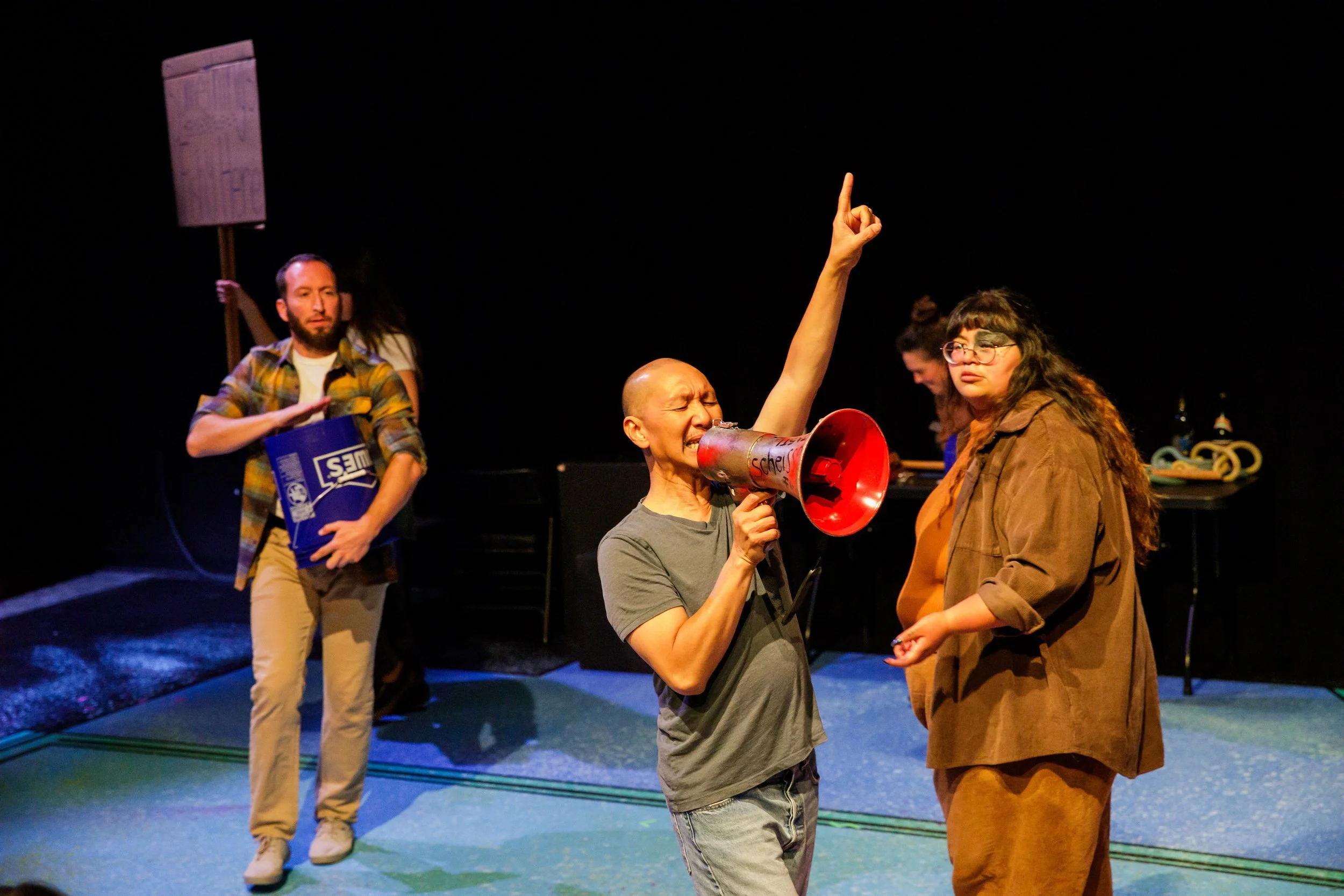
{How do we commemorate the complicated legacy of one Alaskan salmon cannery’s 114 year history}
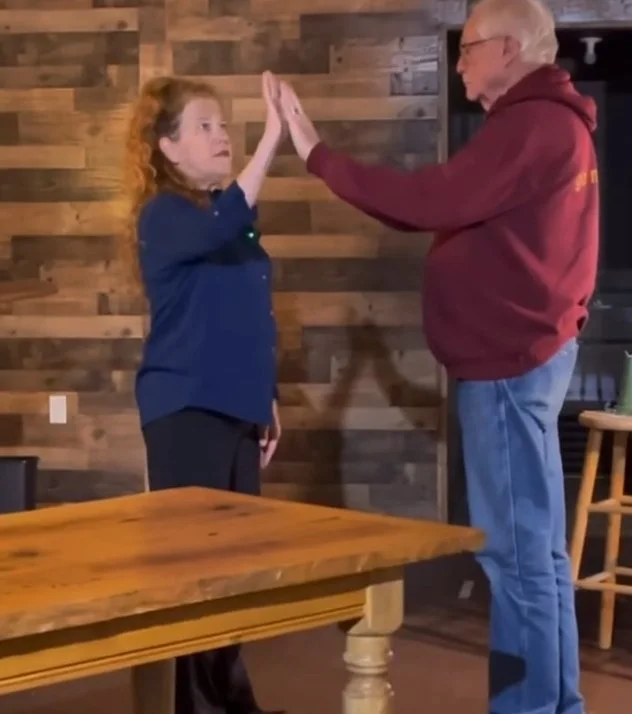
{How can one woman’s personal experiences be crafted into a play with themes that connect to a wide audience?}
Unfinished | 2023-2026
Eastport, ME—touring throughout the states.
Dr. Jenie Smith of Eastport, ME has lived many lives. She wanted to write a memoir that worked as a performance piece. Together we sifted through years of stories and endured many Zoom rehearsals to create the play. While rooted in experiences of her home state, Nebraska, Jenie’s work asks audiences everywhere to consider questions of grief, addiction, doctor burnout, and the dubious morals of the medical establishment.
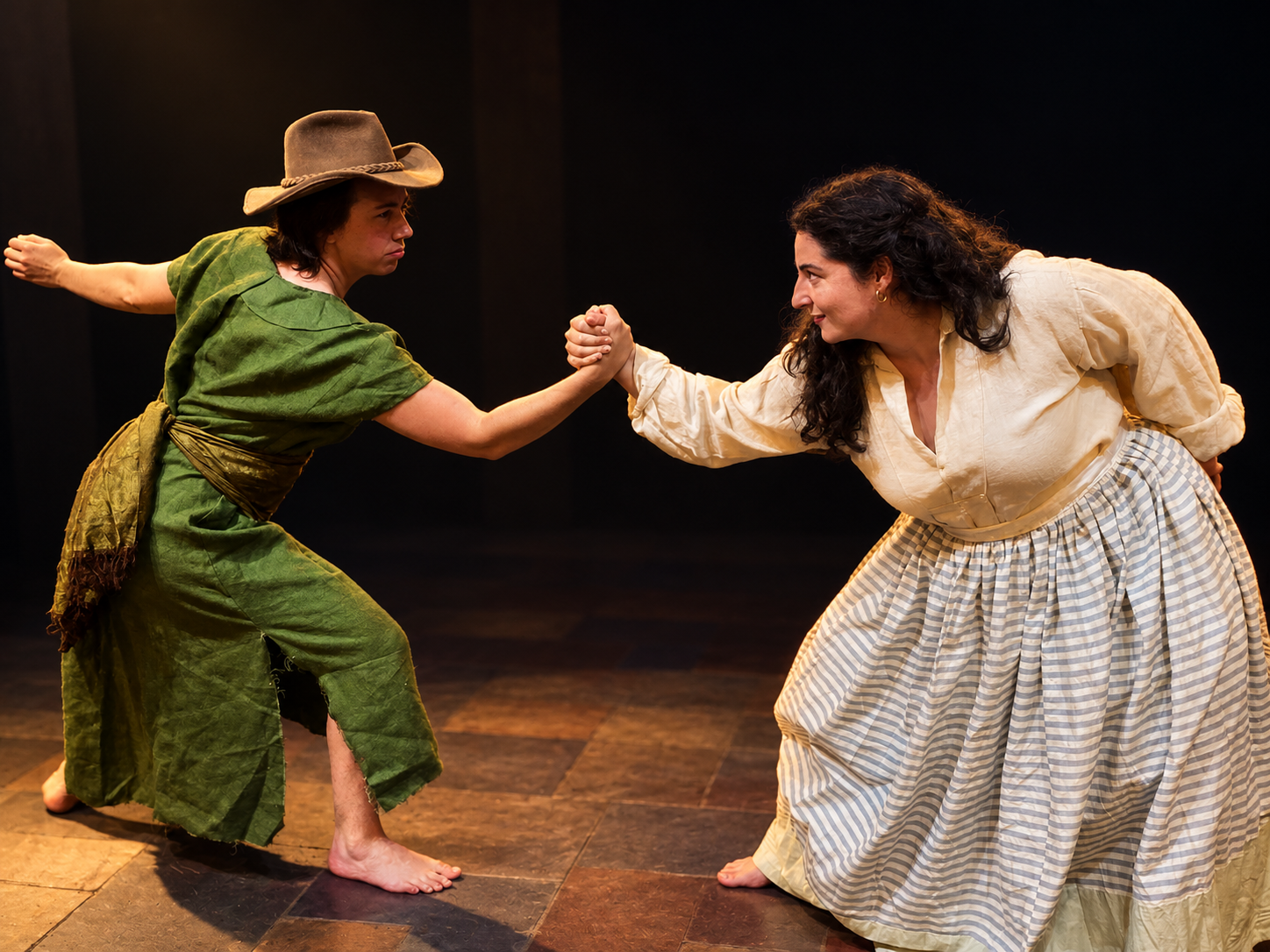
{How do we examine global conflict through a personal, accessible framework}
Judith of the Light | 2026
Cathedral of St. Paul (Erie PA)
Judith of the Light was created in response to the never-ending violence on the global stage. Made in collaboration with the Rev. Caitlyn Ference-Saunders, the play seeks to examine our own inclinations towards violence, the frameworks we use to justify our actions, and the consequences of taking human life.

{How can the untold stories of Central American migration be shared with a US audience?}
La Algajira | 2020
Iglesia Biblica de La Gracia (El Salvador), Servicio Jesuita para el Desarollo (El Salvador), Camila Colina (Chile) and Whitworth University (USA)
I worked with local artists and organizations in El Salvador and Chile to research migration stories. We developed an original, bi-lingual play performed by university students and produced by Whitworth University in Spokane, WA. Student participants formed an ensemble in which they shared their own experiences around migration policies and discrimination. Audience members saw a story featuring Latinx voices for the first time on Whitworth University’s stage. The play inspired dialogue around international migration, representation on university stages, and the importance of community collaboration when sharing stories from multiple identities.

{How do we foster and celebrate residents’ connection to place in Maine’s most economically disadvantaged county?}
Stories from Here| 2017
Eastport Arts Center (Maine, USA) and Island Institute (USA)
At the invitation of the community partners, I collected oral histories and stories from more than 60 residents about specific places in Washington County that were meaningful to the teller. Local high school photographers took pictures of the places mentioned in the stories for a gallery exhibit and open mic storytelling celebration hosted at the Eastport Arts Center. The project particularly fostered a sense of pride of place and community in Washington County, all demographic groups from the region were represented. Additionally, stories shared in the project were used as source material for the play: The Waterwoman, a fictional account of tragic events in Washington County.
{How do mythic/historic stories of women’s violence help us better understand femininity and racism?}
Bloody Be: Hymns of Hunger and Women-Rage | 2015
Ensemble of female-identifying actors at Virginia Tech (Virgina, USA)
I created a devised play based on three mythic-historical women that explores female rage and it’s consequences. This piece generated community conversations around the oppression of women, specifically women of color. Audience members participated in a facilitated post-show dialogue by writing about their own experiences of rage and silencing and posting them on the theatre wall. Ensemble members created a documentary about the process and its impact on them and the community.
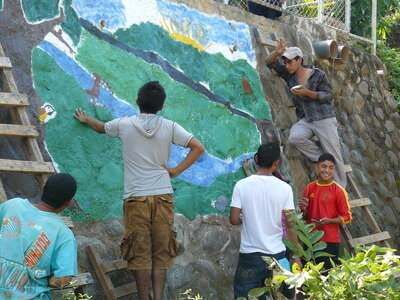
{How can we encourage our young people to imagine a future of possibility in a community that experiences gang violence and economic instability?}
Guayapa Arriba | 2012
Servicio Jesuita del Desarollo (El Salvador), OXFAM America (USA), Artcorps (USA)
I facilitated this project with Salvadoran youth to create two community murals which pictured youth fulfilling future goals and celebrated their town’s identity. One mural was on a local residence by the main road. The second was on the wall of the local elementary school. Everyone entering the community saw both murals. Two youth participants are now local farmers and community leaders, one leads a women’s savings group, and two are continuing onto higher education.
Does your community have a story to tell?
Let’s discuss what a rural playmaker can help your community achieve.